
Event
Sermon on Luke 12:13-15 | Overcoming Greed and True Wealth | St. George Indian Orthodox Church
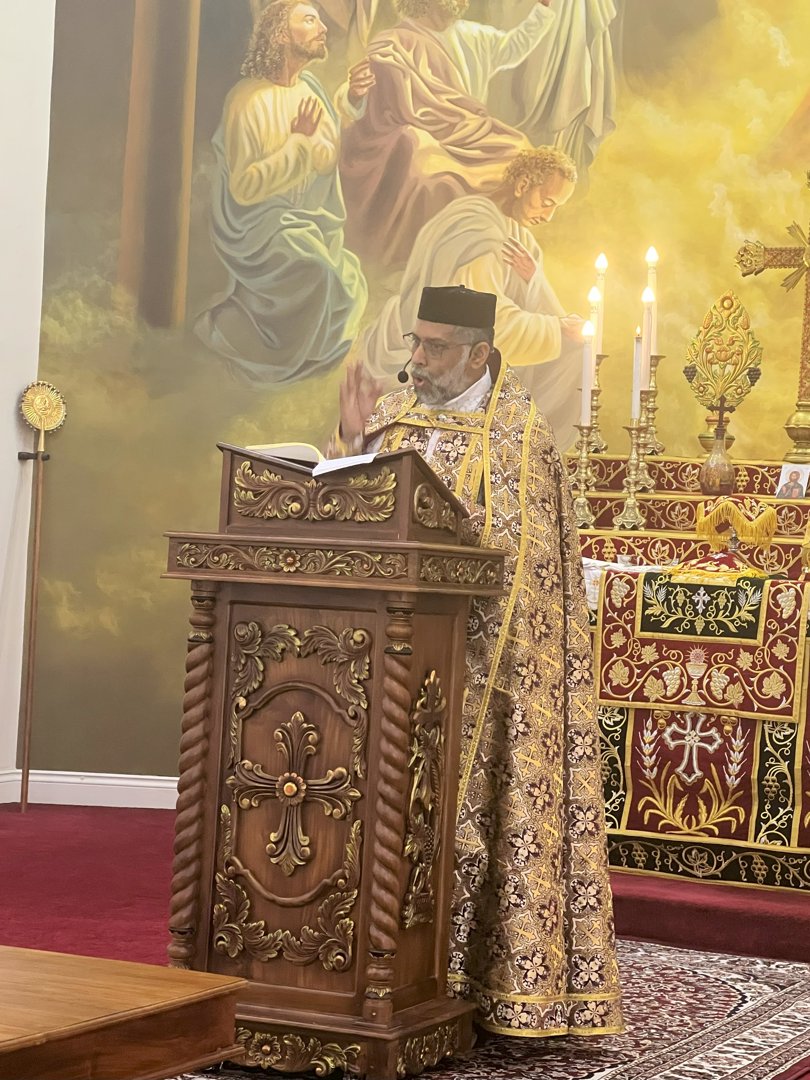
In the Gospel of Luke, chapter 12, verses 13 to 15, we read about a man who approached Jesus with a request to settle a dispute over inheritance. This passage sets the context for the Lord’s teaching on greed and true wealth. The Lord was giving instructions to His disciples about certain matters. The background of this is that when the Lord was among the crowd, He was addressed as "Teacher" or "Guru." A man came to Him and said, "Teacher, please intervene and tell my brother to divide our inheritance with me." This man was asking Jesus to mediate and ensure that the inheritance was divided fairly with his brother.
The background to this situation lies in the context of Israel, where rabbis often acted as arbitrators in such matters. They would mediate disputes, particularly those related to dividing property or resolving conflicts. Perhaps this man, aware of such a tradition, approached the Lord and requested Him to intervene and divide the inheritance or settle the property dispute.
Immediately, the Lord looked at the man and addressed him, saying, "Man, who appointed Me as a judge or divider of your property?" The Lord questioned who had given Him the authority to act as a judge or arbitrator in such matters. The statement that follows is noteworthy. The Lord turned to His disciples and said, "Be on your guard against all kinds of greed." Last Sunday, we discussed a similar passage, didn’t we? It was about wealth and the dangers of greed. This Sunday’s topic is also closely related to that theme.
The Lord says, "Stay away from all forms of greed." In human life, if you ask someone if they are satisfied with anything, they might say they are satisfied only momentarily, perhaps after eating a meal when their stomach is full. At that moment, they might say, "Okay, I’m satisfied, I don’t need anything more." But in other areas of life—whether it’s wealth, building a house, or decorating it—are we ever truly satisfied? No matter how beautiful a house we build or how well we furnish it, after living in it for six months or a year, we often think, "This could have been better," or "This could be made more beautiful." The same happens with vehicles. When we buy a car, and a new model comes out, we think, "I should have bought that one instead," or "This one isn’t good enough." These desires keep arising.
That’s why the Lord tells His disciples, "Be free from all forms of greed." Then, He shares a parable with them. I won’t go into the details of the parable, but it’s about a foolish man—or in newer translations, a man lacking wisdom. This man worked hard and amassed great wealth, but he didn’t know what to do with it. After storing it all up, he thought to himself, "God has given me everything I need. I don’t need to worry about anything anymore. This is enough for me to live comfortably." But God addresses this man as "foolish" or "lacking wisdom." The key verse in this passage, which we should reflect on, is this: True wealth lies in being rich in divine matters. Being rich in this world doesn’t mean accumulating money, property, or material things. True wealth is being rich in the things of God.
Being rich in God’s matters can be challenging because it often requires us to examine and correct our personal lives. I’ve seen people who faithfully set aside a portion of their income as a tithe or offering. Some, when they earn a large profit from a business, dedicate a percentage of it to God’s work. Others, when building a house, also build a home for someone who doesn’t have one. Or, alongside educating their own children, they support the education of underprivileged children who lack financial means. This is what it means to be rich in God.
God doesn’t come down to teach someone or build a house for them, but He enables us to do these things. The Lord says, "Whatever you do for others, you do for Me." If you give someone a meal or even a glass of water, you are doing it for the Lord. This is a profound biblical principle we need to understand deeply.
This brings us to the well-known parable of the rich man and Lazarus, which gives us further clarity on being rich in God. You’re familiar with this parable, aren’t you? There was a rich man who was extremely wealthy. The Bible describes him as wearing fine linen garments and having many servants. Then there’s Lazarus, a poor man who lay at the rich man’s gate, begging for food. His body was covered with sores, and dogs came to lick them. He didn’t even have the strength to drive the dogs away. His health had deteriorated, and he lay in front of the rich man’s house.
The story doesn’t end on earth. The second part takes place in heaven, where the situation reverses. We know where the rich man ended up. But Lazarus was found in Abraham’s bosom. Seeing Lazarus there, the rich man asked the Lord, "Why did this happen?" The Lord replied clearly, "On earth, you received good things, while Lazarus received only bad things. That’s why you are suffering here, and he is comforted."
The issue here is about how we earn and use wealth. We know that wealth must be earned rightfully. If even a single rupee comes to us through unjust means, it will lead us astray. Secondly, the Lord teaches us how to use the wealth He blesses us with. The rich man’s mistake was that he failed to see the poor man lying at his gate. He didn’t give him a meal, tend to his wounds, or even offer him a glass of water. That was the rich man’s error.
This is a significant lesson for us as Christians. We are blessed by God. He has brought us to this land called Australia with abundant blessings. As we live here, we must reflect on our personal lives and surrender them to God. The Bible teaches us to follow His commandments. It’s always good to examine ourselves and evaluate whether we are living according to these principles. A devout life is essential, isn’t it? Living with devotion to God requires righteousness and faithfulness in our lives. Righteousness is a quality every person should have. A life without righteousness and faithfulness is incomplete.
For a Christian, a faithful life includes prayer, tithing, fasting, and living with discipline. Whether it’s our conduct on Sundays when we come to church or our appearance and behavior in daily life, we must live with faithfulness. Another important aspect is compassion—having a generous heart toward others. We shouldn’t only think about ourselves or our own happiness. We must consider others, help them, and remember them in our actions. We should love others, not just our own family, but those around us. Compassion means helping someone in need when we see their struggles.
God has called us to be rich in virtues. He has given us these qualities, and when we uphold them, we can truly say we are rich in God. May the Lord enable us to live this way. We should not store up perishable wealth but strive for the imperishable wealth that God has prepared for us in heaven. May our lives be aligned to attain that wealth while we live on this earth. With this prayer, I conclude, asking that the Holy Spirit of God bless us all.